

Why Is My Teen So Angry? Or So Quiet?
Understanding what's underneath teenage outbursts and shutdowns
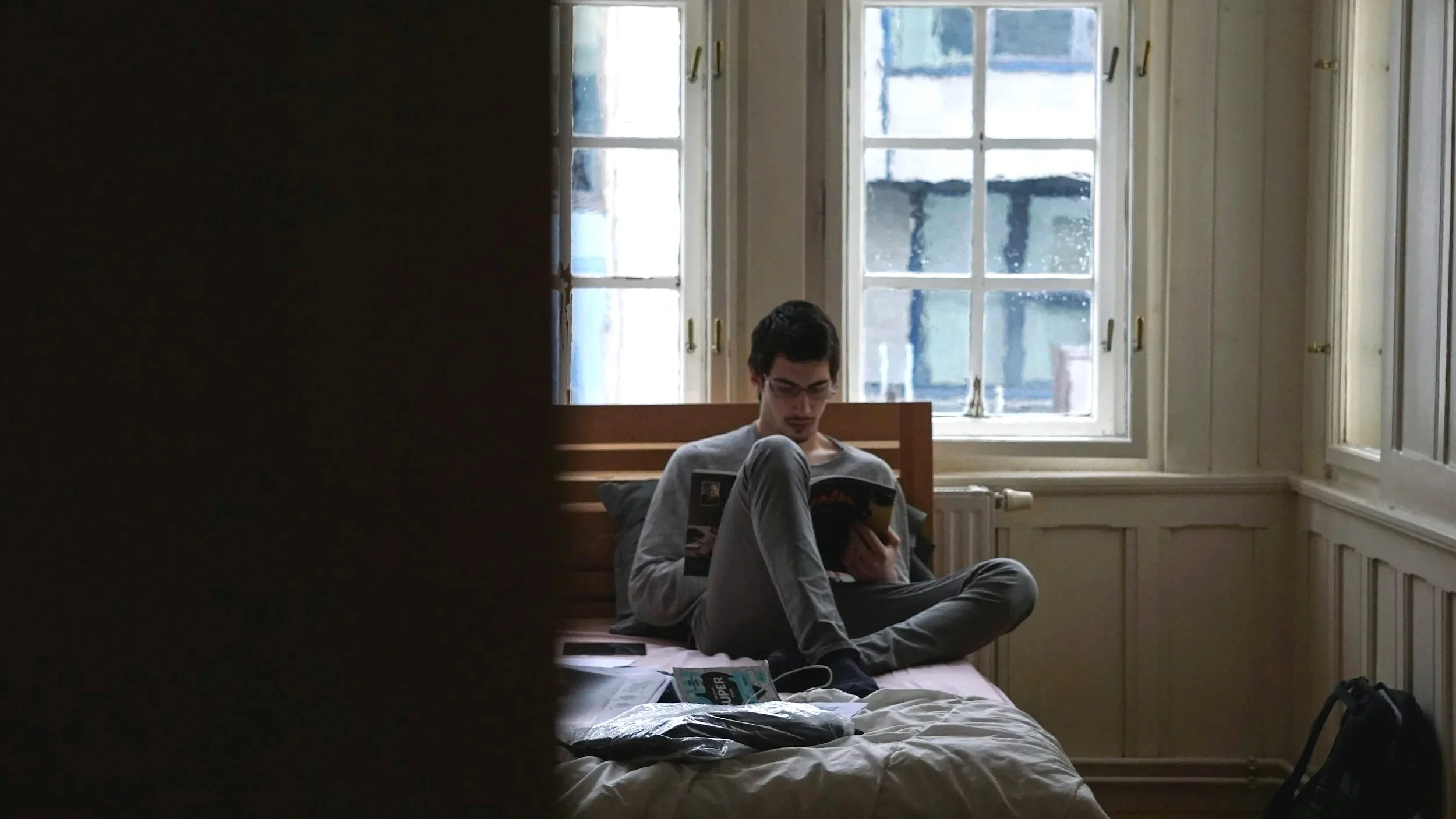
The slammed door. The eye roll. The shrug that says "whatever" while the rest of the body says something very different. The teenager who used to talk to you now answers in monosyllables or doesn't answer at all. The one who used to laugh easily now flares into anger over something that, to you, seems impossibly small.
If you are parenting or caring for a teen right now, some version of this scene is probably familiar.
It is tempting to call it drama, attitude, or just "the teenage years." But underneath most shutting down and lashing out is something quieter and harder to name: a young person who is overwhelmed, frightened, or ashamed, and who does not yet have the words or the nervous-system regulation to say so directly.
Today's teens are growing up in a particular kind of pressure cooker. Academic demands, social media comparison, climate anxiety, an unstable job market, dinner-table conversations about housing they cannot imagine affording. And they are absorbing all of this while their brains are still under construction. The parts responsible for emotional regulation, impulse control, and long-range thinking are the last to mature. Meanwhile, the parts that feel everything intensely are already fully online.
That mismatch-big feelings, partly-built regulators-is the engine behind most of the behaviour adults find puzzling or maddening.
What teenage "acting out" is really communicating
When teens do not yet have language for what they feel, the feelings come out through behaviour. A slammed door may be saying I feel powerless. Sarcasm can hide shame. "Laziness" is often exhaustion, anxiety, or the quiet despair of a teen who has decided, somewhere deep down, that trying is no longer safe. Defiance frequently means I need to feel some control over something.
Reading behaviour this way is not the same as excusing it. Limits and accountability still matter. Teens actually need them to feel safe. But when adults can hear what's underneath, the response shifts. And the response is what changes the relationship.
Why connection has to come before correction
When a teen is dysregulated, their nervous system is not available for a lecture. Reasoning, consequences, and well-aimed advice all bounce off a brain that is, in that moment, in survival mode. What it needs first is co-regulation: the felt sense of another calm, steady person nearby.
That can sound like:
"You seem really overwhelmed right now."
"I want to understand what's going on, not argue about it."
"I'm here, even if we disagree."
These are not magic phrases. They are signals: I am not your opponent. I am safe to come close to. More often than not, that signal is what unlocks a real conversation; the kind a lecture never could.
How parents can help teens express emotions
Normalize the feeling, not the behaviour. "It makes sense you're angry" and "It is not okay to insult your sister" can live in the same sentence. Teens need to know that their inner world is not the problem. What they do with it is what you are working on together.
Lend them language. Most teens cannot answer "what's wrong?" because they genuinely do not know. Try offering options instead: Is this more like pressure, or embarrassment, or feeling left out? Anger is often the top layer; underneath, you will frequently find anxiety, shame, grief, or loneliness. Naming the real feeling takes most of the heat out of it.
Ask before fixing. "Do you want help solving this, or do you just want me to listen?" is one of the most underused questions in family life. Many conversations escalate because the teen wanted to be heard and the adult, with the best of intentions, leapt into problem-solving
Show them what regulation looks like. Teens learn from what the adults around them model far more than from what those adults instruct. "I had a hard day, so I'm going for a walk before we talk about this." "I'm anxious about work right now, and here's how I'm taking care of myself." That is the curriculum.
When teen therapy can help
Some teens need more than a steady adult at home and that is not a failure of parenting. It is often the most useful thing a parent can offer: another safe, neutral relationship in which to do the work.
At The Authentic Life, our therapists who work with teens draw on a range of evidence-based approaches depending on what each young person needs. Mindfulness-based work helps teens notice and slow down intense reactions. Acceptance and Commitment Therapy (ACT) builds the capacity to feel difficult emotions without being run by them. Cognitive Behavioural Therapy (CBT) targets the thinking patterns that fuel anxiety and self-criticism. DBT-informed skills support teens who experience emotions very intensely. Attachment- and relationship-focused therapy offers what has, for many teens, been the missing ingredient: a relationship in which their inner world is taken seriously, met with curiosity, and never used against them.
No single approach fits every teen. The common factor is the relationship itself - a steady, non-shaming presence in which a young person can begin to know their own feelings and trust them enough to put them into words.
A closing thought for parents
When a teen shuts down or lashes out, it can feel like rejection. Most of the time, it is the opposite. It is a bid for connection in the only language their nervous system can currently speak. Meeting that bid with curiosity instead of criticism is one of the most powerful things an adult can do.
If you have a teen who is struggling or you suspect they are, even though they won't say so, we would be glad to help. And parenting a teen through these years is its own kind of work. Many of the parents we see come in for support of their own; not because anything has gone wrong, but because holding steady for a young person who is changing fast is genuinely demanding. Either route is welcome. You can book a complimentary consultation with one of our therapists for your teen, or for couples therapy, with a focus on parenting.
Reach out today to schedule a confidential consultation. Contact us or book online to speak with a therapist who understands what your family is going through and can help you take the next step.