

Why Repair Is the Most Important Skill in Your Relationship
Understanding the Neurobiology of Connection and Conflict
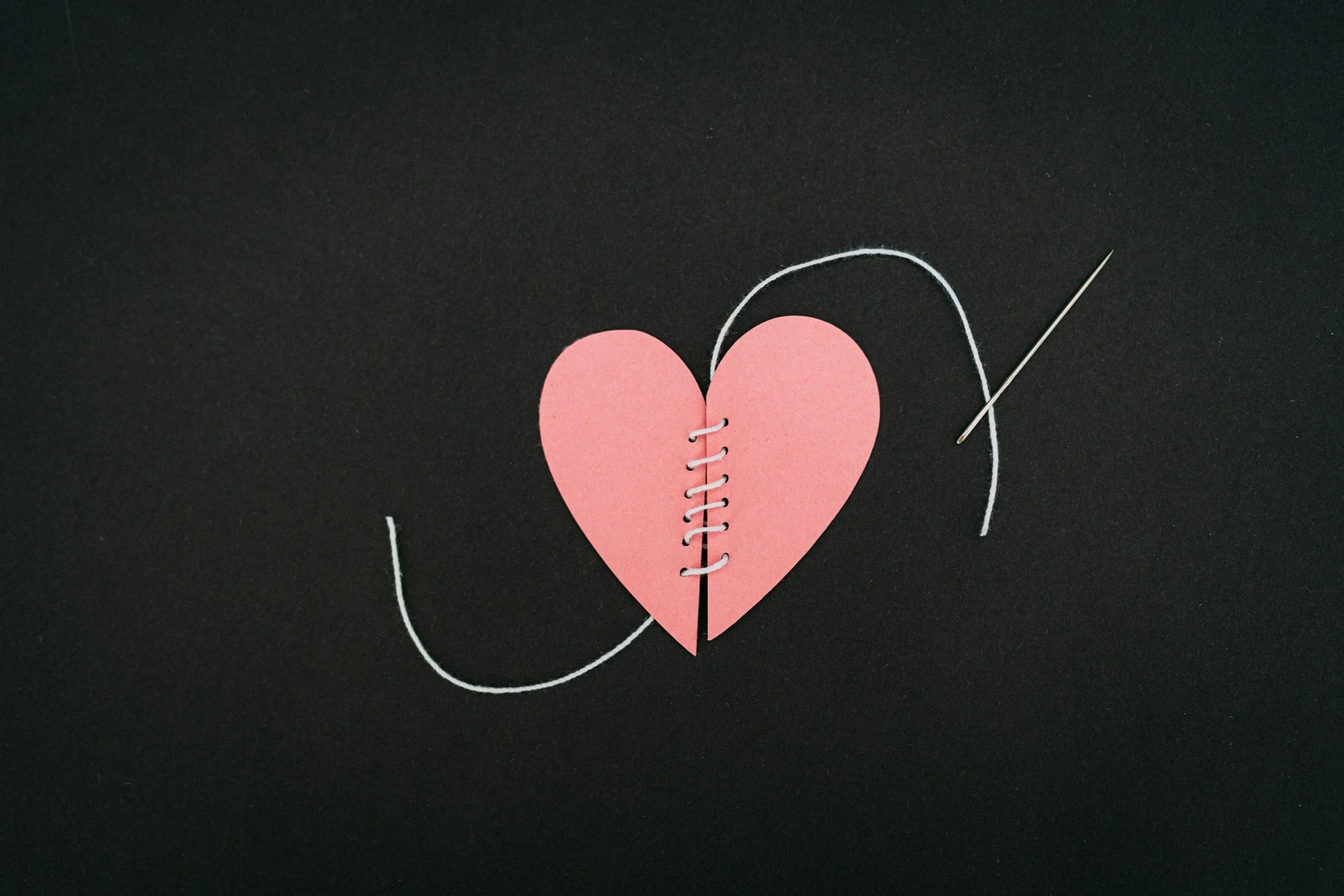
If you've ever found yourself in a recurring argument with your partner—replaying the same frustrations about money, chores, or communication—you're not alone. Conflict is an inevitable part of intimate relationships. But here's what decades of neuroscience research tells us: it's not whether you fight that determines the health of your relationship. It's how quickly you repair.
Your Brain Is Built for War, Not Love
According to Dr. Stan Tatkin, founder of the Psychobiological Approach to Couple Therapy (PACT) and author of Wired for Love, our brains carry a fundamental negativity bias. This means our nervous systems are constantly scanning for threat and danger—a survival mechanism that served our ancestors well, but one that creates unique challenges in modern relationships.
As Tatkin explains, "Our brains are built more for war than love. Our brainstem and lower limbic structures are always on the lookout for threat and danger. And painful memories are more easily made than pleasurable ones."
This neurobiological reality has profound implications for couples. When we're in conflict with our partner, our primitive brain—the part responsible for fight, flight, or freeze responses—takes over. Our blood pressure rises, our heart rate increases, and our ability to listen, reason, and communicate becomes impaired.
The Memory Problem: Why Speed Matters
Here's where the science becomes critical for your relationship: memories are formed through the interaction of neurotransmitters like glutamate and hormones like adrenaline. Strong emotional experiences, especially negative ones, are encoded into long-term memory more easily than positive ones.
When your partner hurts you—whether intentionally or not—your brain begins a clock. If relief isn't provided in a timely manner, that hurt gets stored as a lasting memory. As Tatkin writes, "When partners ignore or dismiss injuries or make unskillful attempts at repair, the offending partner is creating a bad memory in the injured partner—something that will certainly come back to haunt."
This is why making quick repair and making things right as soon as injuries or distress arise is so vital. When couples repair swiftly, the painful experience doesn't have time to consolidate into long-term memory. The relationship remains safe, and partners continue to see each other as allies rather than threats.
When Partners Become Perceived as Threats
Without repair, something troubling happens: partners begin to perceive each other as dangerous. The brain's threat-detection system, which evolved to keep us safe from predators, starts treating our loved one as the enemy.
Tatkin describes this cycle: "If you don't feel that I can fix, repair, make right, make amends, admit a wrong, then you are going to increase your blood pressure, your heart rate...and now we're going to start to go to war."
Once this pattern takes hold, couples enter what researchers call a "negative absorbing state." Partners anticipate the worst from each other. They become self-protective rather than collaborative. Walls go up. Intimacy suffers. The relationship that once felt like a safe haven becomes a source of chronic stress.
The Path Forward: Secure Functioning Through Repair
The good news is that this cycle can be interrupted. Tatkin's research shows that "secure functioning relationships" have two essential characteristics: high positives that are mutually amplified, and negatives that are quickly repaired and corrected.
Notice that the goal isn't to eliminate conflict—that's neither possible nor healthy. The goal is to develop what Tatkin calls the ability to "put fires out quickly so we can proceed." Couples who master repair don't have fewer disagreements; they simply don't let those disagreements become entrenched, threatening memories.
As Tatkin reminds us: "Amends, repair, making things right, and getting back on a collaborative track is the only remedy for making mistakes. We are all perfectly imperfect, which is why we plan on our imperfections and put behaviours and principles in place to fix what we break and learn from our mistakes."
What Repair Actually Looks Like
Effective repair isn't about being right or wrong. It's about prioritizing your partner's sense of safety and the health of your relationship over your ego or your need to win an argument.
This might mean approaching your partner within 30 to 60 minutes of a rupture to signal that despite feeling upset, "we're okay." It might mean making eye contact, offering touch, or simply saying something that reassures your partner that the relationship itself is not in jeopardy.
Tatkin advises couples to stay away from arguing about who remembers events correctly. Memory is unreliable for everyone. Instead, focus on relieving your partner's distress and finding solutions together.
Moving Forward Together
Understanding the neurobiology of your relationship doesn't mean you'll never hurt each other again. It means you'll have a framework for understanding why repair matters so much — and the motivation to get better at it.
When we learn to repair quickly, we're not just resolving individual conflicts. We're actively building a relationship where both partners feel safe, seen, and valued. We're telling our brains, over and over again, that this person is an ally — not a threat.
And that's the foundation of lasting love.
"Repair, fix, relieve your partner even if it isn't/wasn't your fault. The fastest wins and those who delay will lose."
— Dr. Stan Tatkin, PACT Institute