

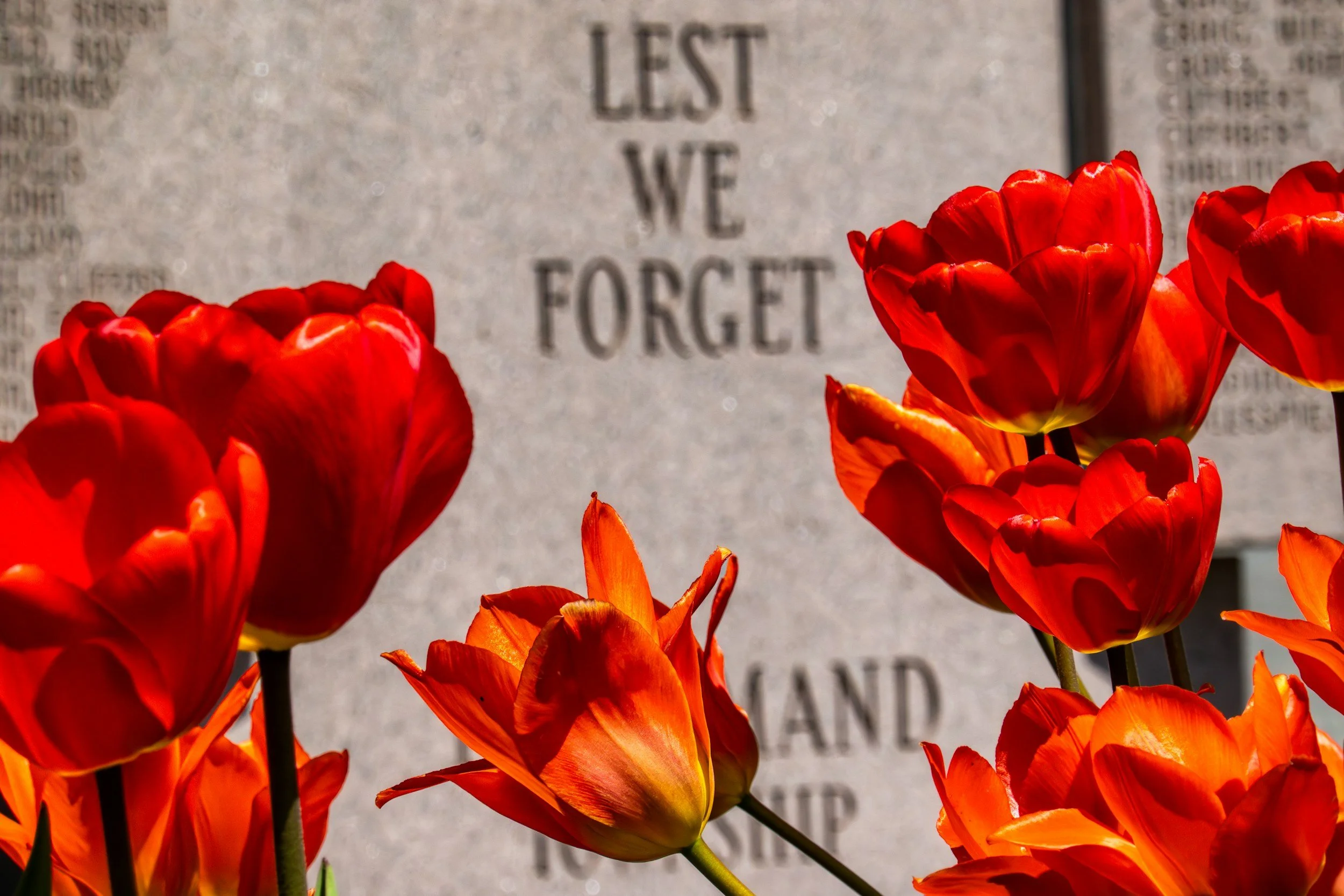
Every November 11, Ottawa becomes the centre of the country's remembrance. The National Remembrance Day Ceremony takes place at the National War Memorial, with the Veterans' March, the Last Post, two minutes of silence at 11 a.m., a 21-gun salute, wreath-laying, and a fly-past (weather permitting). Even if you never go downtown, the day is hard to miss: poppies everywhere, ceremonies on every screen, and a whole city pausing at the same moment.
For many people, that's a meaningful day of gratitude and reflection. For others, especially veterans, serving members, first responders, and the families who love them, it can also stir up memories, grief, and reactions that are hard to explain.
If November feels heavier than other months, you're not imagining it, and you're far from alone. This guide explains why Remembrance Day can bring trauma to the surface, how to get through it, and where to find support in Ottawa. For a broader overview of trauma and its signs, see our guide to signs of trauma, PTSD and complex PTSD.
Why Remembrance Day Can Stir Up Trauma
Trauma lives in the body and the nervous system, which means it can be set off by sights, sounds, dates, and feelings, often without warning. Remembrance Day combines a lot of those at once.
Sensory reminders. Gun salutes, aircraft flying overhead, crowds, sirens, music like the Last Post, and sudden silence can all trigger a startle or alarm response, even when you know you're safe.
Anniversary reactions. Many people find that the body "remembers" difficult dates or seasons before the mind does. Distress can build in the days leading up to November 11, or around other personal anniversaries, without an obvious reason.
Grief. The day can bring up the loss of friends, colleagues, or comrades, and sometimes grief that never had space to be fully felt.
Guilt and moral injury. Some people carry guilt about surviving, about decisions made under pressure, or about things they saw or couldn't prevent. Moral injury describes the lasting distress that can follow events that conflict with your deeply held sense of right and wrong. It's not a sign of weakness. It's a sign of conscience.
Mixed feelings about being honoured. Being thanked for service can feel meaningful, and it can also feel uncomfortable, undeserved, or disconnected from what the experience was actually like. Both reactions are common.
Constant media exposure. News coverage, tributes, and conversations about war can keep the topic in front of you for days.
Who Is Affected
Remembrance Day isn't only difficult for veterans. It can also weigh on:
Serving Canadian Armed Forces members and recently released members
First responders, including police, firefighters, paramedics, and dispatchers, who carry the cumulative impact of years of exposure to crisis. See our page on First Responders, Military & Veterans
Military families and partners, who live with the ripple effects of service and deployments
People who lost someone in service
Children of veterans, who may have grown up around unspoken trauma
Newcomers to Ottawa who have lived through war or conflict, for whom ceremonies, sirens, and war imagery may hit very close to home
Signs the Season Is Affecting You
Pay attention if, in the days around Remembrance Day, you notice:
Trouble sleeping, nightmares, or waking on high alert
Irritability, anger, or a short fuse
Feeling numb, detached, or "somewhere else"
Intrusive memories or flashbacks
Wanting to avoid ceremonies, news, crowds, or conversations
Drinking more than usual, or using other ways to take the edge off
Pulling away from family and friends
Feeling a heavy sense of guilt, sadness, or hopelessness
These are common responses to trauma, not personal failings. In Canada, persistent psychological injuries linked to service are often called operational stress injuries (OSIs), and the term post-traumatic stress injury (PTSI) is widely used for public safety workers. Both describe real, treatable conditions.
How to Get Through November 11
There's no single right way to observe the day. These ideas can help you take care of yourself while still honouring what matters to you.
Decide in advance how you want to mark the day. Attending in person, watching from home, visiting a quiet memorial, or a private moment of reflection are all valid. Choosing in advance is easier than deciding in the moment.
Plan for the sensory load. If gun salutes or crowds are hard, consider watching from a distance, bringing ear protection, standing near the edge of the crowd, or choosing a smaller local ceremony.
Bring someone you trust, and agree on a signal for when you need to step away.
Have an exit plan. Know how you'll leave, and give yourself permission to go at any point.
Limit media. Turn off notifications and set boundaries around war coverage if it's building tension.
Be careful with alcohol. It can feel like it takes the edge off, but it often worsens sleep, mood, and anxiety.
Build in something grounding afterward, such as a walk, a meal with someone you care about, or a quiet evening.
Reach out before the day, not just after. Telling someone ahead of time that you're anticipating a hard day can make a real difference.
If you start to feel overwhelmed, grounding can help: feel your feet on the floor, name five things you can see, and let your exhale be a little longer than your inhale. Our post on why you freeze or fawn explains more about how the nervous system responds under stress.
If You Love Someone Who Struggles Around Remembrance Day
Partners and family members often notice the change first: more distance, shorter patience, restless nights. A few things tend to help:
Ask how they'd like to spend the day, rather than assuming
Offer company without pushing conversation
Avoid taking withdrawal or irritability personally; it's usually about what they're carrying, not about you
Look after yourself too, because loving someone through trauma takes a toll
Our post on loving a first responder speaks to many of the same experiences for partners.
Support Is Available
You don't have to white-knuckle your way through this season.
VAC Assistance Service: Veterans, former RCMP members, and their families and caregivers can speak to a mental health professional 24/7, free and confidential, at 1-800-268-7708 (TTY 1-800-567-5803). You don't need to be a VAC client to use it.
9-8-8: Call or text Canada's Suicide Crisis Helpline, 24/7.
In an emergency: Call 911.
Ongoing trauma therapy can also make a lasting difference. At The Authentic Life, our therapists work with military members, veterans, first responders, and their families, using evidence-based approaches such as Cognitive Processing Therapy (CPT), Prolonged Exposure (PE), and Internal Family Systems (IFS). You can learn more about how these compare in our guide to EMDR vs. CPT, or visit our trauma therapy page.
Eligible Veterans may also have access to mental health treatment coverage through Veterans Affairs Canada, so it's worth checking your eligibility with VAC.
You Don't Have to Carry It Alone
Healing from trauma isn't about forgetting, and it isn't about being "strong enough" to handle it on your own. It's about helping your mind and body feel safe again, so remembrance can be something you choose, not something that ambushes you.
Take the First Step Toward Healing
Reaching out is often the hardest part. You don't need to have the right words, a full story, or a diagnosis. You just need to be willing to start a conversation.
At The Authentic Life, our therapists offer trauma therapy in person at our Ottawa (Centrepointe) and Orléans clinics, and virtually across Ontario.
to talk through what you're experiencing, ask any questions, and see whether trauma therapy is a good fit, with no pressure and no commitment.
If you are in crisis or having thoughts of suicide, call or text 9-8-8 (Canada's Suicide Crisis Helpline), available 24/7, or call 911 in an emergency.
This article is for general information and isn't a substitute for professional assessment or diagnosis.